

Your Authoritative DNS Is a Security Blind Spot
10 min read | June 30, 2026 | CertaDNS Team
Every time the internet needs to find something under your domain, it eventually depends on your authoritative DNS. A website visitor needs an address. An application needs an endpoint. A mail system needs to find your MX, SPF, DKIM, or DMARC records. Those questions arrive at the service responsible for your zone.
Most authoritative DNS providers answer the question and move on. Resolution works, uptime looks fine, and the rest of the signal disappears. You are left with a domain that is available, but largely invisible.
That is a missed opportunity. Authoritative DNS sits close to the public edge of your organization: where the world tries to reach you, where your records define what is legitimate, and where early signs of abuse can surface. Treated as a commodity, it is a blind spot. Treated as a source of telemetry, it becomes a practical security vantage point.
Why the authoritative vantage is unique
A scanner looking at your domain from the outside has to infer a lot. It can query public records, enumerate common names, and make a best guess about what it sees. It cannot reliably know your intended record set, which changes are expected, or which sources are repeatedly asking questions about your zones.
Your authoritative DNS starts from a stronger position. It holds the records you publish and sees the queries that reach those zones. For email, it can also bring DMARC reporting into the same domain-level view.
That creates a useful foundation for visibility and detection:
- Queries aimed at your zones: You can observe the request patterns that make it to authoritative DNS, including demand for specific hostnames and unusual failures.
- Your exact record set: You know which aliases, nameservers, and records are intended, which makes drift and abandoned references easier to spot.
- DMARC reporting for your domain: Mail authentication reports can show sources attempting to send as your domain, including sources that are not authorized.
There is one important technical nuance: recursive resolvers cache DNS answers, so no authoritative provider sees every individual end-user lookup. It sees the queries that reach the authoritative layer, which are still the relevant public signals for how the internet is trying to resolve your zones.
That is why authoritative DNS can be more than a reliable answer engine. It can be the place where operational reality and public exposure meet.
Visibility: DNS analytics
Raw DNS traffic is not useful because it is large. It is useful because it reveals change.
A traffic spike may be a campaign that worked, a new integration that is misconfigured, or a broader internet event. A concentration of queries from a geography you do not normally serve may be harmless, or it may be worth checking. A sudden increase in failed lookups can point to typos, stale software, broken deployment assumptions, or someone probing names that do not exist.
CertaDNS DNS Analytics turns those patterns into a view your team can use. Across your zones, you can see:
- Query-volume trends and hourly request charts
- Geographic origins of requests
- Top networks by ASN and top resolvers
- The hostnames being queried most often
- Response health, including NXDOMAIN and SERVFAIL patterns

This is operational insight first. It helps you validate launches, investigate unexpected traffic, find popular endpoints, and understand the consequences of a DNS change without waiting for a user to report a problem.
It is also an early-warning signal. Failed requests tend to show up before a human files a ticket. Query trends can show when a hostname becomes unexpectedly interesting. Resolver and network patterns can help your team distinguish broad demand from a narrow cluster of attention.
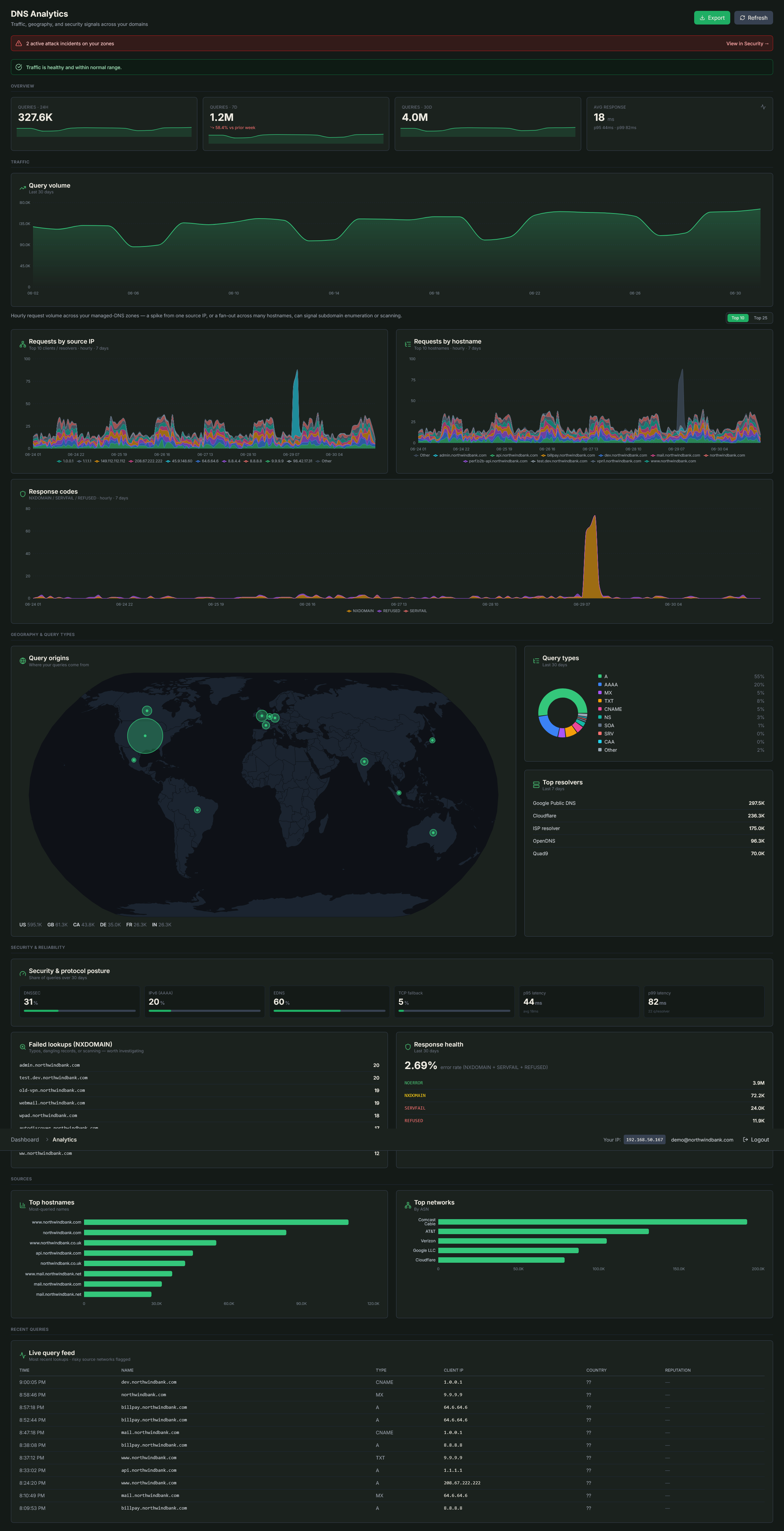 CertaDNS DNS Analytics turns authoritative query traffic into hourly trends, geographic context, top networks, top resolvers, and response-health signals across your zones.
The goal is not to turn every chart into an incident. It is to give the team responsible for your domain enough context to recognize the difference between normal behavior, an operational issue, and something that deserves investigation.
Threat detection at the DNS layer
DNS is involved at several points in an attack lifecycle. An attacker often starts by learning your namespace, then looks for a weak handoff or forgotten dependency, and may eventually abuse your brand through mail or other public-facing services.
Looking at one isolated signal creates noise. CertaDNS Security is built around the sequence: reconnaissance, takeover risk, and weaponization. It surfaces findings across those stages, then correlates related findings into scored incidents with a timeline and email alerts.
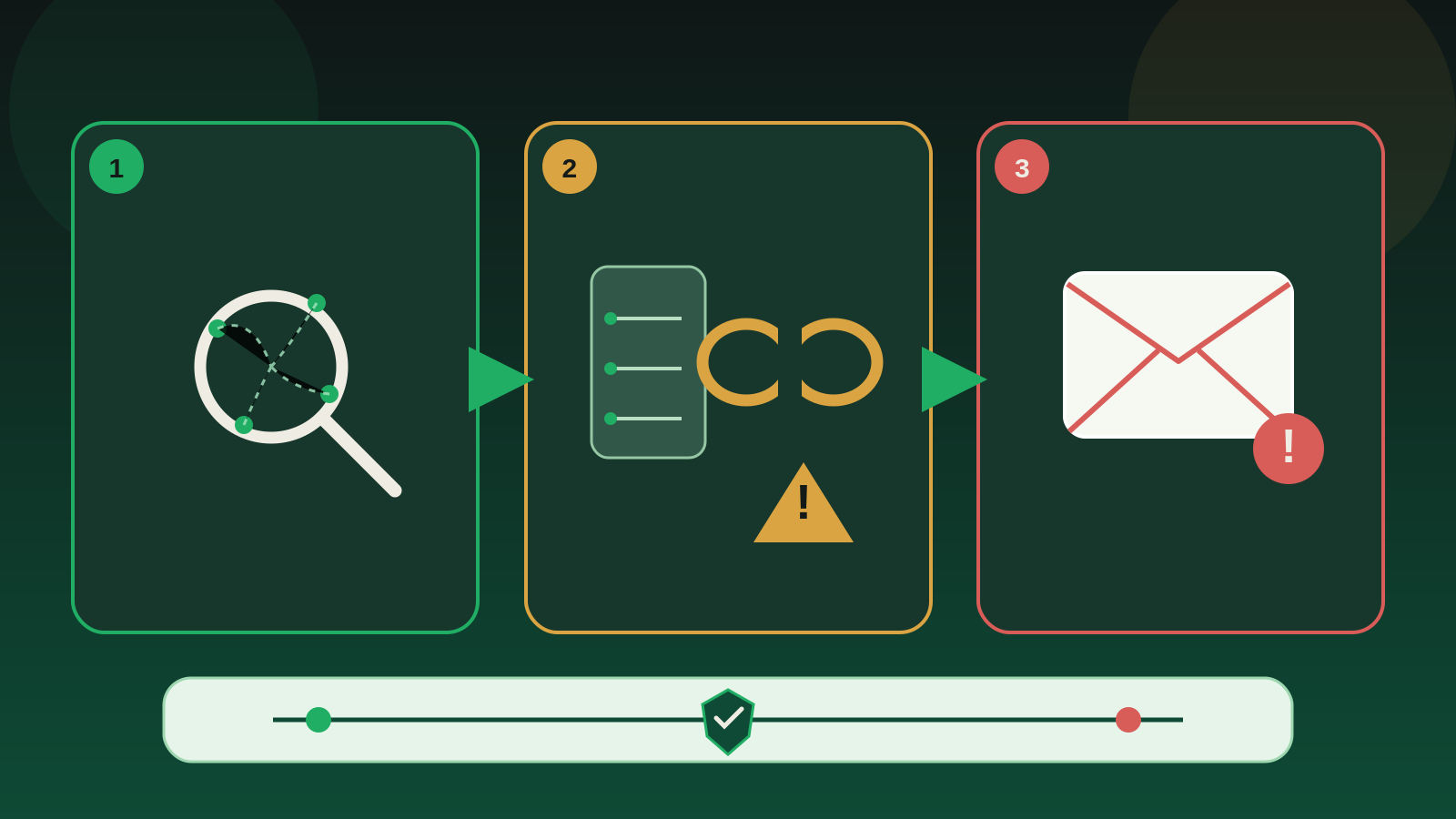
1. Reconnaissance: enumeration and mapping
Before attackers can misuse a domain, they often try to understand it. That can look like hostname fan-out, repeated queries for nonexistent names, or a spike in failed lookups while someone attempts subdomain enumeration.
An NXDOMAIN response alone is not suspicious. Normal visitors mistype addresses, applications keep old configuration around, and automated systems produce background noise. The signal becomes more useful when the pattern changes: a sudden burst, a broad sweep through name variations, or a clear departure from your normal baseline.
CertaDNS monitors for these enumeration-style patterns so your team can see when someone appears to be mapping the public surface of a zone.
2. Takeover: dangling records and nameserver drift
DNS records often point to services operated elsewhere. Over time, a project is retired, a cloud resource is deleted, a vendor relationship ends, or a hostname is left behind. The DNS record remains, but the destination no longer belongs to you.
That kind of dangling reference can create subdomain-takeover risk. Similarly, an unexpected nameserver change or drift from your intended delegation can indicate that a critical part of your domain's control plane needs attention.
CertaDNS looks for records that point at abandoned or third-party resources and for unexpected nameserver drift. The purpose is visibility: identify the exposure while there is still time to clean it up or confirm that the change was deliberate.
3. Weaponization: domain spoofing through email
A domain can be targeted without anyone touching a web record. Email spoofing is a good example. Someone can attempt to send messages using your name in the visible From address, relying on recipient trust to make the message believable.
DMARC reports can reveal the sources attempting to send as your domain and whether authentication aligned. That makes them a useful signal for the weaponization stage, especially when unauthorized or failing sources show up alongside other activity around the same domain.
CertaDNS brings DMARC-derived spoofing signals into the broader DNS security picture rather than leaving them as raw files in a separate mailbox.
From disconnected findings to a scored incident
The important part is correlation. A failed lookup spike, a dangling record, and a DMARC spoofing source each deserve different handling. When related activity occurs around the same domain or time window, the combined story is more useful than three disconnected notifications.
Instead of leaving you with a feed of alerts, CertaDNS correlates these stages into a scored incident with findings and a timeline. The practical outcome is clearer triage: something is happening, here is how it developed, and here is why it matters.
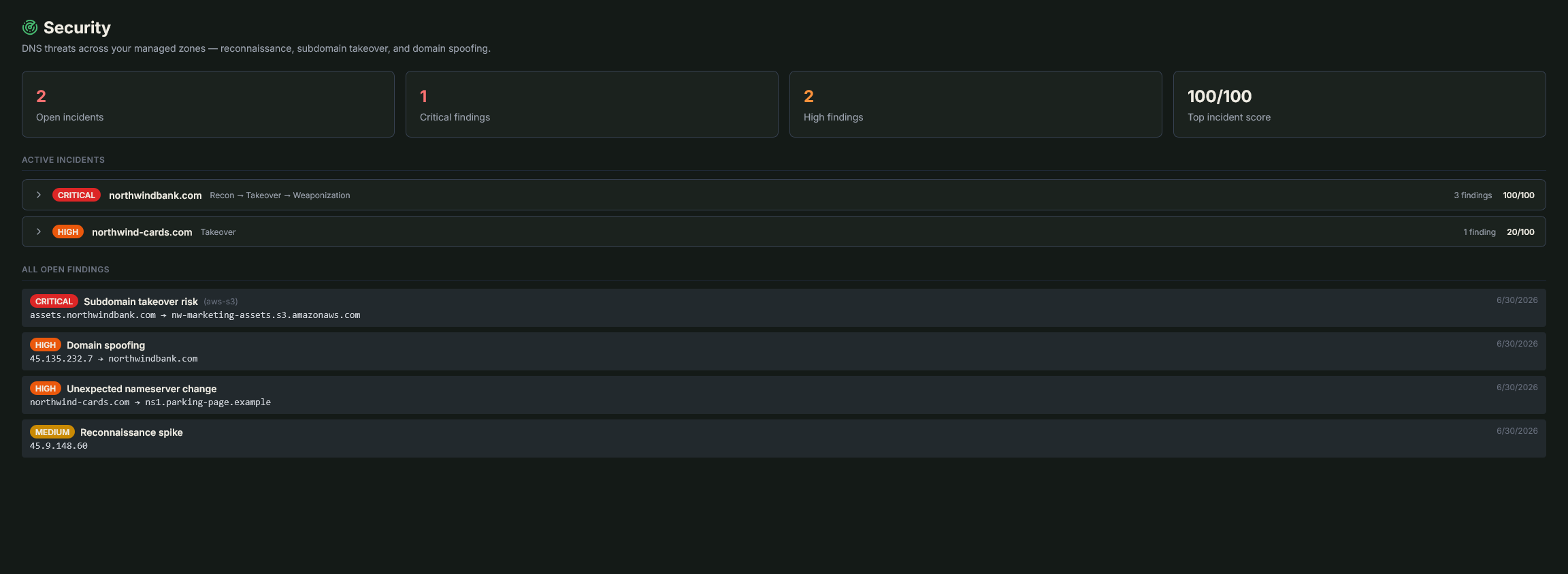 CertaDNS Security brings reconnaissance, takeover-risk, and domain-spoofing findings together as scored incidents with the context needed for faster triage.
Where the market falls short
Most managed authoritative DNS services do the essential job well: publish records and answer queries reliably. For many teams, that is where the relationship ends.
The additional visibility security teams need is often missing entirely, offered as a separate product, or available only through an enterprise sales process. That leaves smaller organizations with a frustrating choice: accept limited domain-level visibility, stitch together several tools, or pay for a security suite sized for a much larger company.
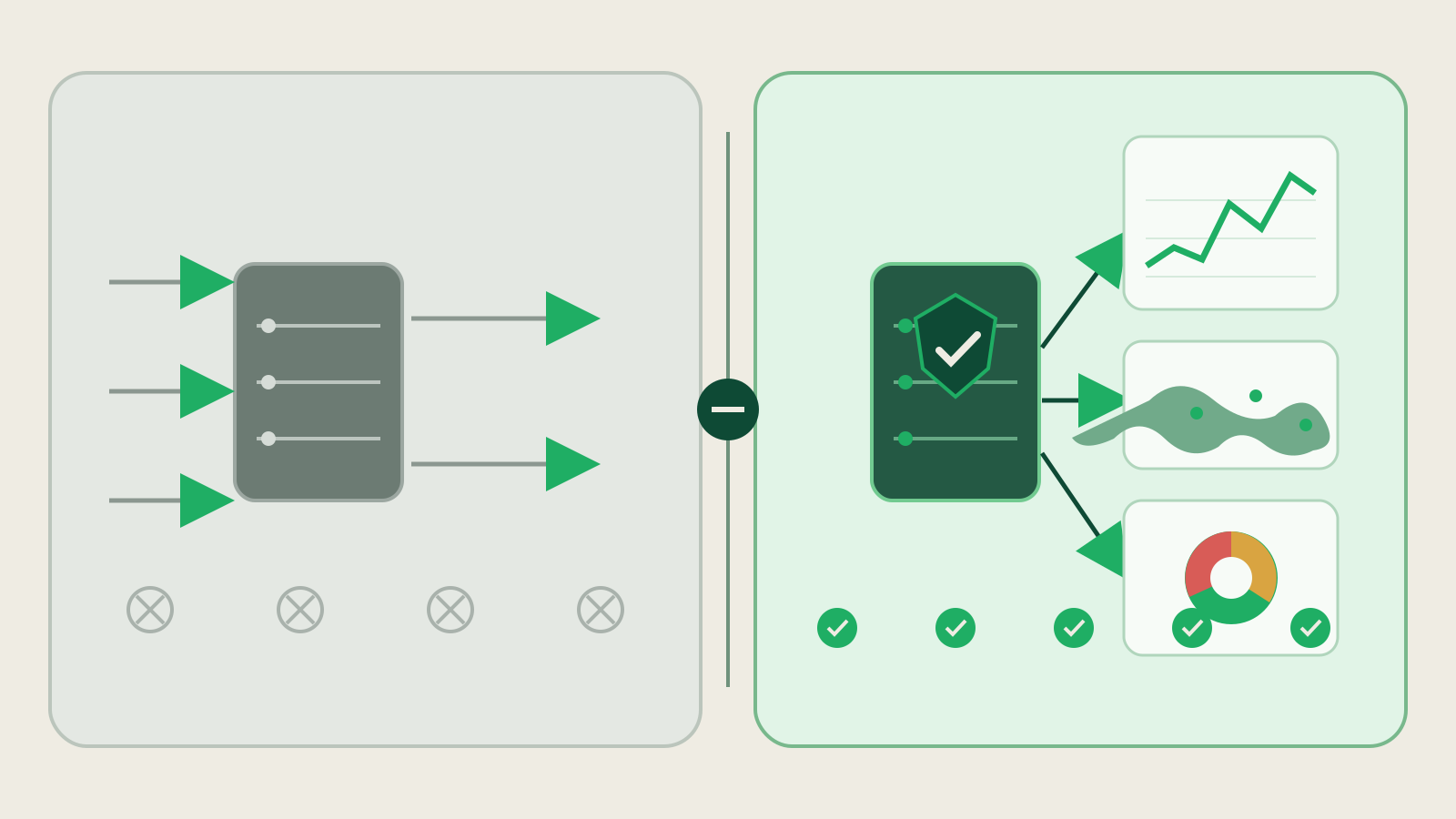
This is not a criticism of reliable DNS resolution. Availability, DNSSEC, and resilient nameserver operation are table stakes. The gap is what happens after the answer is returned.
A provider that gives you only resolution does not help you answer questions such as:
- Which hostnames are drawing unusual interest right now?
- Did NXDOMAIN failures spike after a deployment, or is someone sweeping the namespace?
- Which networks and resolvers are querying our zones most often?
- Are old records pointing to resources we no longer control?
- Is someone attempting to send unauthenticated mail as our domain?
For SMB and mid-market teams, those are real security and operational questions. They should not require an enterprise contract or a pile of disconnected add-ons.
Why CertaDNS
CertaDNS gives you managed authoritative DNS with the visibility and threat-detection context that typically sits out of reach for teams outside the enterprise-security market.
Your zones remain the foundation: hosted authoritative DNS, DNSSEC, and redundant secondary nameservers. On top of that foundation, CertaDNS adds DNS Analytics and Security so the service that answers for your domain can also show you what is happening around it.
That means you no longer have to:
- Treat DNS traffic as an opaque operational detail
- Infer domain interest from scattered logs or outside scans
- Hunt through raw query data to spot meaningful changes
- Separate subdomain-takeover review from your DNS management workflow
- Leave DMARC spoofing signals disconnected from other domain risks
- Buy a large enterprise security suite just to gain basic domain-level context
CertaDNS gives teams a single place to host zones, understand the query patterns reaching them, and receive alerts when reconnaissance, takeover risk, or domain spoofing deserves attention. It is managed authoritative DNS with a stronger point of view: your DNS should not only answer. It should help you see.
Make authoritative DNS part of your security picture
Your authoritative DNS already sits at the point where the internet tries to find your domain. Moving it to CertaDNS turns that position into useful visibility: trends that help operate your services, signals that help identify risk, and correlated incidents that make triage less ambiguous.
Move your authoritative DNS to CertaDNS and make your domain easier to understand, defend, and manage.